
Story: Adam Nelson (@HD_DirtKing)
We’re only one week into March, and the men’s basketball coaching carousel is already spinning furiously. So far, 18 head coaches have been let go, and that number will certainly climb as conference tournaments and Selection Sunday approach. And yes, I’m including Mark Schmidt in that total — you’ll never convince me that was a completely voluntary retirement.
Here are some stats on the moves that have happened so far:
The average 2025-26 record before a coaching change in this was 11–19 (.363)
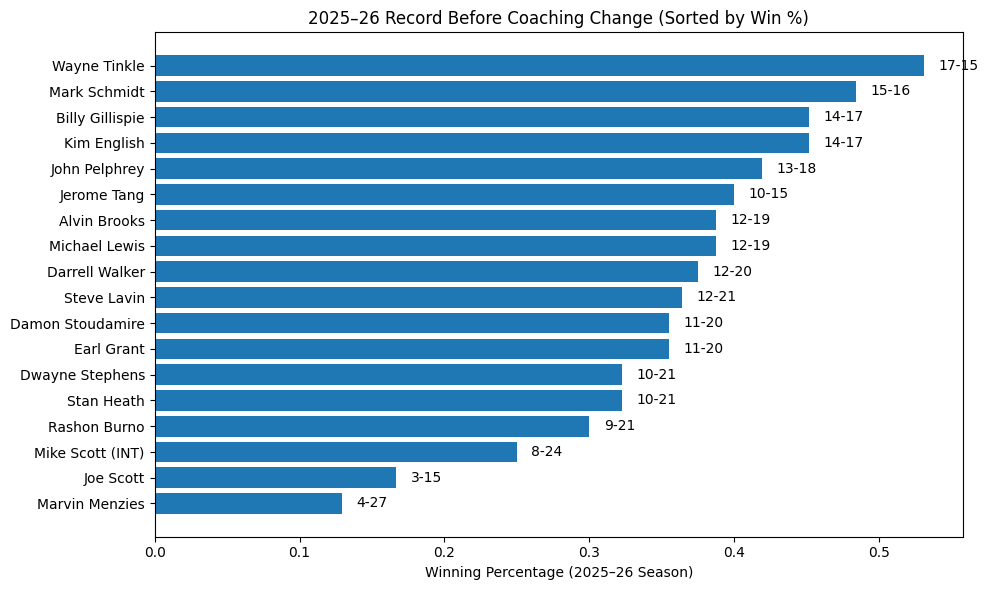
Wayne Tinkle is obviously the outlier here – the only one over .500 and one of two still playing (with PC’s Kim English). His Oregon State squad beat San Francisco last night, and will face Gonzaga tonight in the WCC semifinals.
Next, we look at longevity. Here’s the length of time each coach spent at their school before being let go:
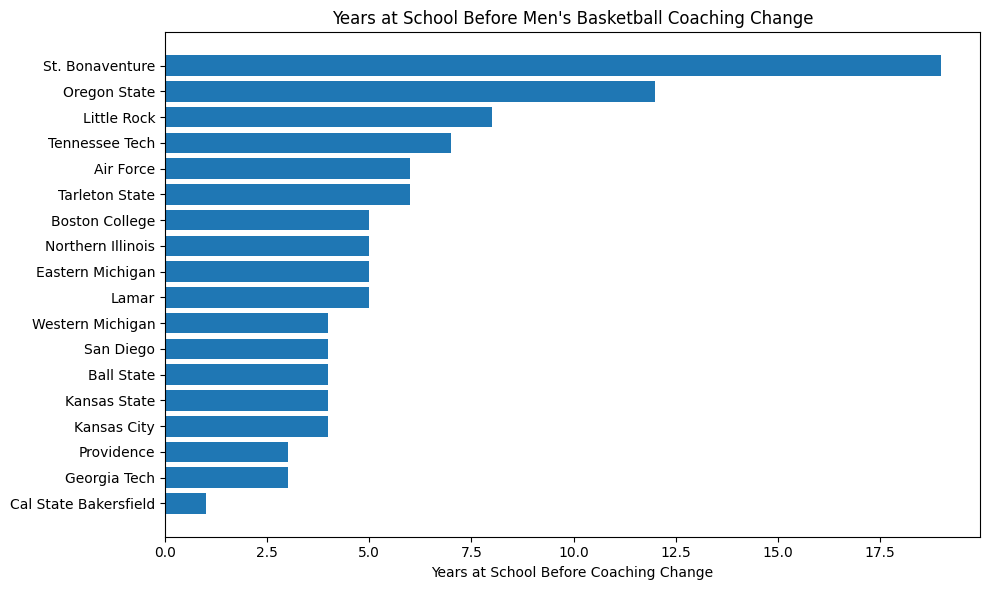
The average tenure before a change: ~5.8 years, the median: 5 years. Tinkle and St. Bonaventure’s Schmidt are the outliers here. If you take them out, the average tenure falls to 4.6 years.
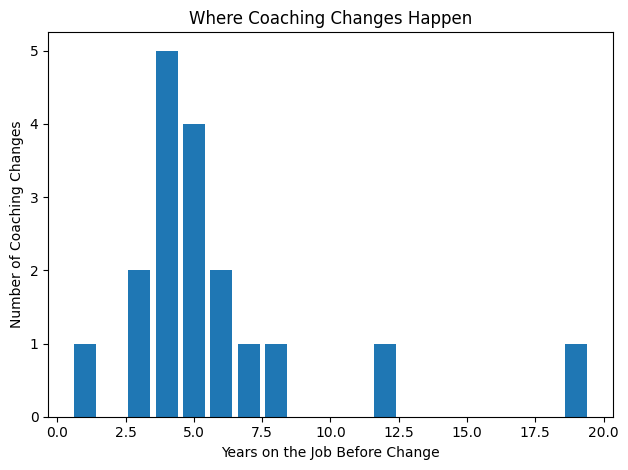
This is what the “sweet spot” for coaching changes based on the first 18 dismissals looks like:
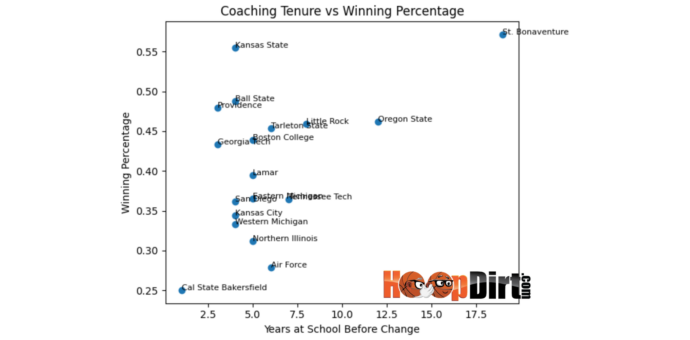
Lastly, we can look at coaching tenure vs winning percentage:
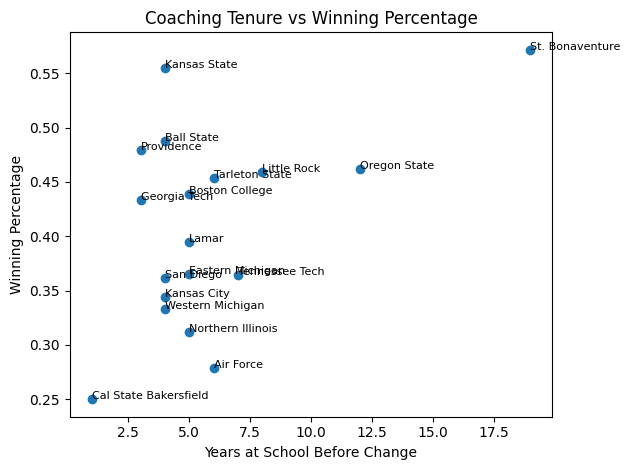
Schmidt and Kansas State’s Jerome Tang were the only two coaches with overall records over .500 at the schools that let them go.
Some insights from this data:
- In this sample of recent coaching changes, the average tenure was 5.8 years, but drops to 4.6 years when long-tenured outliers are removed, suggesting most coaches now have about four to five seasons to prove they can win.
- Year 4–5 + ~.350 winning percentage = coaching change territory
- 89% of coaching changes happened with losing records.
One of the most interesting things to track moving forward will be how NIL and the transfer portal impact these timelines. With more resources and immediate roster turnover now possible, the expectation to win quickly has never been greater. The question will be whether coaches are given even less time in the future as schools invest more money and have greater access to players who can make an immediate impact.